


Puppy’s first bath
Puppy’s first bath
The first bath is one of the most important moments in a young dog’s life. It is not only about cleanliness, but above all about building positive experiences and trust.
A well-managed first puppy bath will help make future grooming routines — including visits to the groomer — calm and stress-free.

Content
- Why the first bath is so important
- The most common mistakes during the first bath
- What should a dog’s bath look like?
- How often should you bathe your dog?
- Choosing a shampoo for puppies
Why the first bath is so important
During the early stages of development, a dog learns intensively through associations — every new experience may be remembered as either positive or negative. That is why it is so important for the first bath to be calm, predictable and safe.
From a behavioural perspective, bathing is one of the more complex experiences. It combines many stimuli at once:
- the sound of water and the bathroom environment,
- changing temperature,
- the feeling of wet fur,
- intensive physical contact.
Behavioural studies and organisational recommendations indicate that positive experiences at a young age reduce the risk of fears developing in adulthood.
The most common mistakes during bathing

- Using the wrong cosmetic products
A dog’s skin has a different pH and is more sensitive, so such products may lead to dryness, itching, irritation or allergies.
- Lack of preparation
A chaotic bath — looking for a towel or shampoo during the process — causes unnecessary stress for both the dog and the owner.
- Incorrect water temperature
Water that is too hot may irritate the skin, while water that is too cold may cause discomfort.
- Not rinsing the shampoo thoroughly
Cosmetic residue left on the skin may lead to irritation, itching and dermatological problems.
- Skipping drying
Leaving a dog wet, especially in a cool environment, increases the risk of chilling and skin problems.
- Forcing the dog despite stress
This is the most serious mistake. Forcing the dog may reinforce fear and make every future bath more difficult.
Preparation – the key to success
Preparation – the key to success
Before any water is introduced, it is worth getting your puppy used to the bathing situation itself. This stage helps build positive associations and minimise stress.
Getting used to the place — bathtub/shower
- Place your puppy in the bathtub or shower tray while it is still dry.
- Let them stand, walk around and explore freely.
- Reward calm behaviour with a treat.
- Do not close them in immediately — give them a sense of control.
This way, the bathtub stops being a “strange place” and becomes something familiar and pleasant.
Getting used to sounds
For dogs, sounds are often more stressful than the water itself.
It is worth gradually getting your puppy used to:
- the sound of the tap being turned on,
- running water at low pressure,
- the sound of a hairdryer.
How to do it?
- First, turn on the water or hairdryer at a distance.
- Gradually reduce the distance.
- Reward your dog for staying calm.
This is a process of desensitisation — getting used to stimuli.
Getting used to touch and “bath simulation”
- Touch the paws, belly and back.
- Gently “pretend” to pour water with your hand.
- Place a towel against the dog’s body.
- Make movements similar to washing.
This way, your dog will not be surprised during the actual bath.
Technical preparation
Before you start bathing:
- Prepare all accessories: shampoo, towel and non-slip mat.
- Make sure the room is warm and free from draughts.
- Keep bath time as short as possible — everything should be within reach.
Good preparation eliminates chaos and increases your dog’s sense of safety.

What should a dog’s bath look like?
Temperature and safety
The optimal water temperature is around 37°C — it should feel pleasantly warm, but not hot. Use a non-slip mat to prevent your dog from slipping, and avoid a strong stream of water — a gentle flow is better.
Remember: your pet can read your emotions very well — your calmness means their calmness.
Washing technique
The bathing process should be simple, short and well organised:
- Wet the coat, starting from the body, not the head.
- Apply a small amount of shampoo.
- Gently massage the skin and coat using circular movements.
- Rinse the foam thoroughly.
Thorough rinsing is essential — shampoo residue may cause itching and irritation.
Washing the head and sensitive areas
The areas around the eyes, ears and muzzle are particularly sensitive and require caution. Use a damp cloth instead of pouring water over them.
After-bath care — an often overlooked stage
After washing:
- Dry your dog thoroughly with a towel, without rubbing too intensely.
- If you use a hairdryer, set it to a lukewarm airflow.
- Remember to familiarise your dog with the sound of the hairdryer beforehand.
Building positive associations
- Reward your dog with a treat.
- Praise them in a calm voice.
- Finish the process with something pleasant, such as playtime.
This helps your dog remember bathing as something neutral or positive.
Process summary
A proper bath is not only about washing, but about the whole process of preparation and building your dog’s experience:
✔ getting used to the bathtub and stimuli, without water
✔ calm and short washing
✔ gentle handling of sensitive areas
✔ thorough drying and a reward
These are the elements that determine whether your dog will stay calm during baths in the future — and whether grooming becomes a routine rather than a problem.
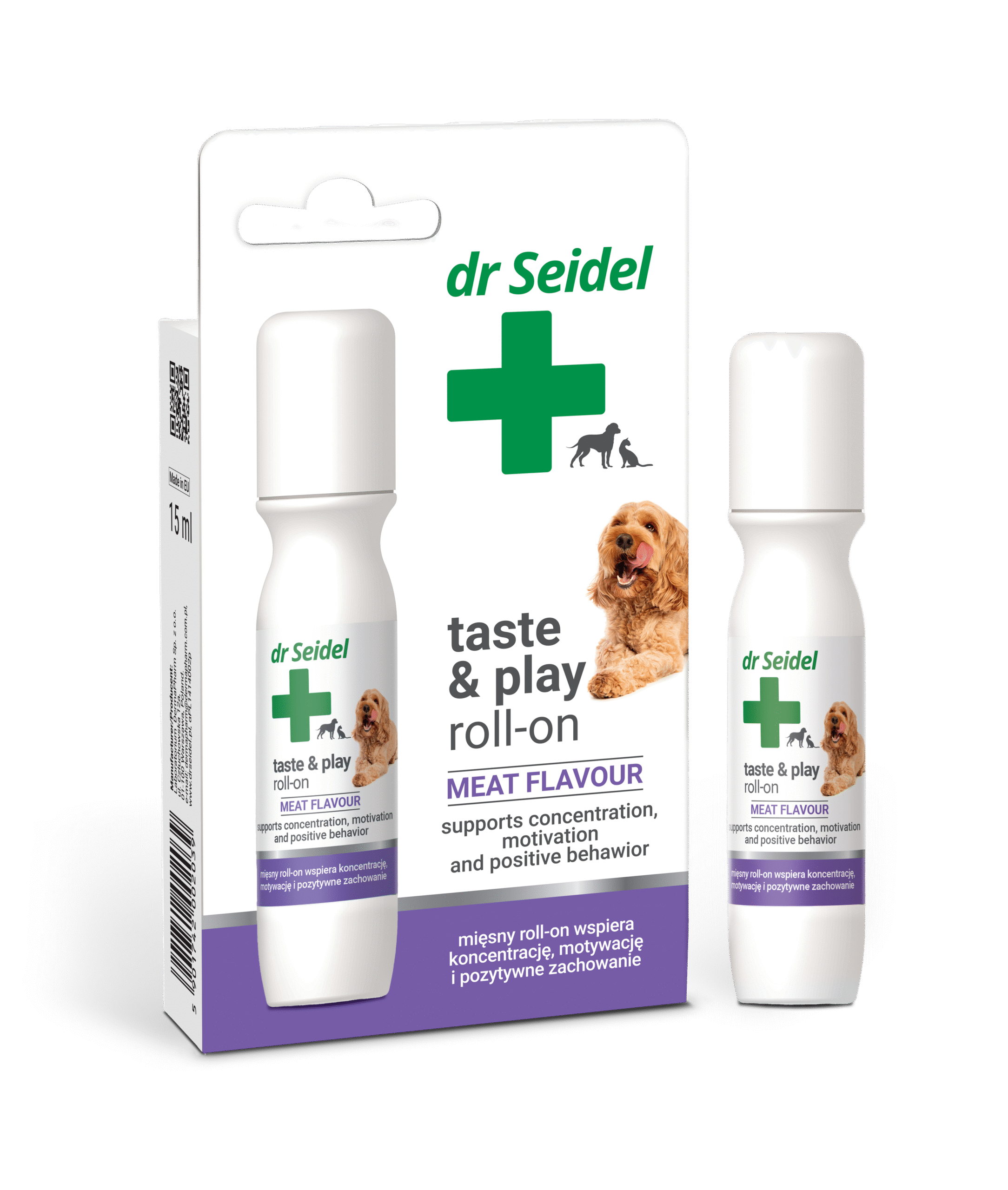
The perfect addition to your dog’s bath routine is a reward for your little one’s brave attitude — a delicious liquid treat, TASTE & PLAY Roll-On. Thanks to its unique roll-on format, rewarding is convenient and extremely enjoyable for dogs. This helps your four-legged friend associate grooming with something pleasant.
How often should you bathe your dog?
The frequency of bathing is one of the most common questions asked by dog owners. Contrary to what many people may think, there is no single universal answer, as it all depends on several key factors: the dog’s age, coat type, lifestyle and skin condition.
- Breed and coat type — long-haired dogs and breeds that require regular grooming, such as Maltese or Shih Tzu dogs, need more frequent care than short-haired breeds.
- Grooming — dogs that are regularly clipped are often bathed during each grooming visit, usually every 4–8 weeks.
- Dermatological problems — in the case of allergies or skin diseases, bathing frequency should be determined by a veterinarian.
- Lifestyle — active dogs that walk in mud or forests may require more frequent baths.
- Skin and coat condition.
Choosing a shampoo for puppies
An important part of bathing your four-legged friend is choosing the right product. When selecting a shampoo for your dog, pay special attention to its scent. Remember that what works perfectly for people will not necessarily be suitable for your dog’s care. Fruity or citrus aromas can often be irritating for dogs. A good choice is a fragrance-free shampoo that does not contain any colourants, helping to avoid many allergic reactions. However, if you would like to use a scented product, it is worth choosing one containing lavender, which, according to research, is well tolerated by animals.
A shampoo for puppies should primarily help maintain the proper level of skin hydration, such as Dr Seidel’s Shampoo for Puppies, which also contains allantoin to support the reconstruction of the hair’s protective barrier, making the coat soft and shiny.
Benefits of the shampoo:
- Gentle cleansing base
- Carefully selected ingredients: allantoin, hydrolysed collagen, castor oil and emollients
- Safe, functional formula for sensitive skin
- Gentle care, hydration and protection for sensitive skin


26 May 2026
